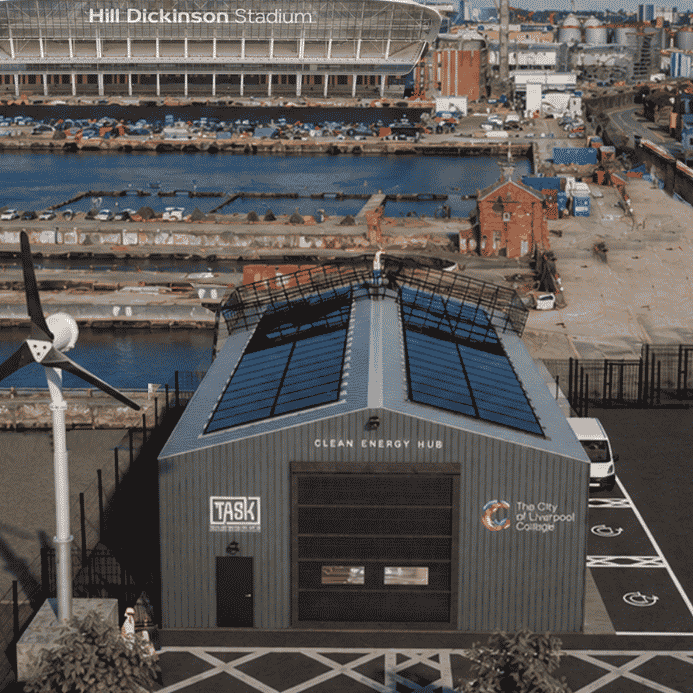
The building is the curriculum at Liverpool College
At The City of Liverpool College's off-grid Clean Energy Centre, cosmOS turns the building into a live lesson in making, storing and managing energy.
Most people learn about energy from textbooks or training rigs. At The City of Liverpool College's new Clean Energy Technical Excellence Centre, students learn directly from the building itself. As the college's principal, Elaine Bowker, says: "The building is the curriculum."
The £1m centre is located at Collingwood Dock, within the Liverpool Waters regeneration area, next to the college's Construction Academy. Task Contract Solutions delivered the project, funded by the college's status as one of five Clean Energy Technical Excellence Colleges in the UK, designated by the Department for Education. The centre generates its own electricity using rooftop solar panels and a full-size wind turbine, stores energy in a battery, heats with air source heat pumps, and charges electric vehicles. The college calls the site fully off-grid.
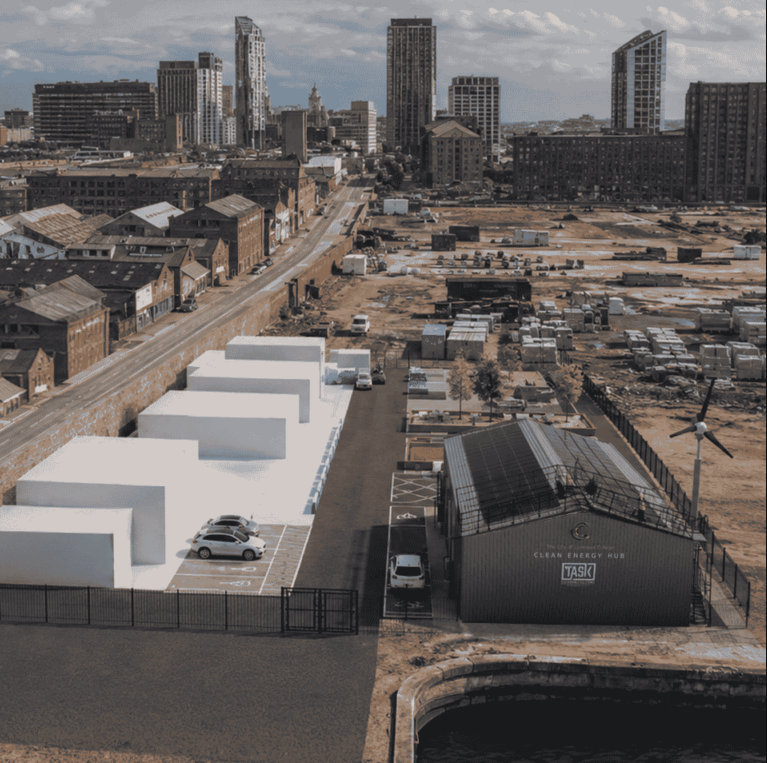
The Clean Energy Centre at Collingwood Dock, in the Liverpool Waters regeneration area.
cosmOS was connected in October 2026, before the centre's official opening on 16 November.
Making the invisible visible
Energy is difficult to teach because it isn't visible. A solar array looks the same whether it's at 10% or 90% output, and you can't tell how much charge a battery has just by looking at it.
cosmOS combines the centre's six systems (solar, wind, battery, EV charging, HVAC, and metering) into one digital twin that shows the site as it is. Instead of six separate control panels from different manufacturers, you get a single live view of the whole building. You can watch the turbine spin faster as the wind comes off the Mersey, see the battery charge on a sunny afternoon, and check how much power the heat pumps use when the workshops start to warm up in the morning.
That was the college's goal. Each system had its own controls, but the college wanted to see what was happening across the entire site at once.
A glimpse of the buildings to come
Most of the buildings these students will work on in their careers won't just sit at the end of a cable. They will generate, store, and decide when to charge, when to heat, and when to hold back. Right now, most buildings still run each system separately, with solar on one app, chargers on another, and the BMS on its own.
The skills gap isn't just about installing a heat pump or wiring a battery. It's about understanding how these systems work together. A student who has seen a heat pump, a battery, and a row of EV chargers share the same limited supply learns something a single-technology rig can't teach.
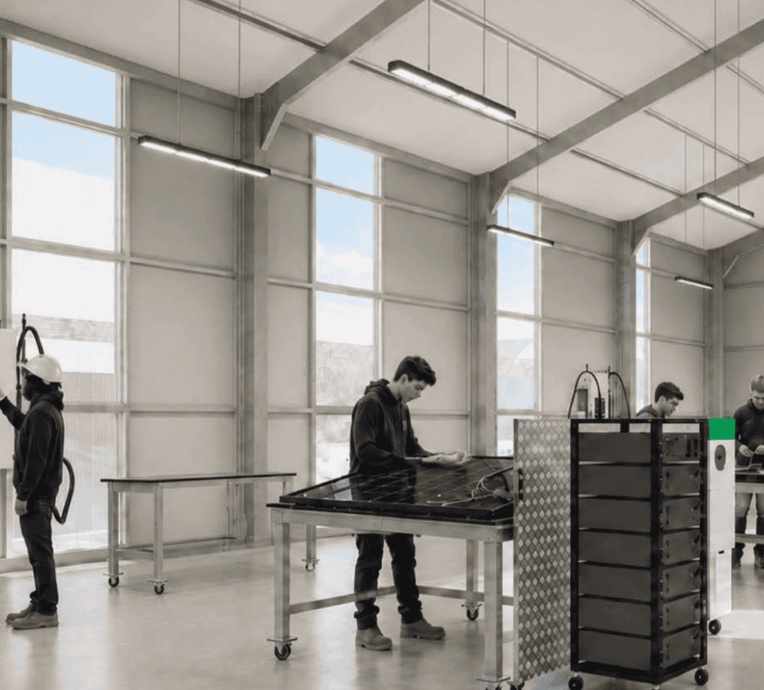
Inside the centre's workshop, where students train on solar and battery storage.
Resilience, not just savings
Being off grid changes the focus. In a grid-connected building, energy management is mostly about cost and carbon. On a self-sufficient site, the main concern is whether everything keeps running.
This makes the centre a place to test important questions about resilience and self-sufficiency, using real data instead of just theory:
- How long can the battery carry the site through a still, grey week in January?
- Which loads should give way first when storage runs low?
- Should the vehicles charge now, or wait for the wind?
These are the kinds of questions that schools, hospitals, businesses, and public estates will face more often as grid connections become harder to secure and energy security becomes more important. Students here get to answer these questions on a real, working building.
Starting from day one
Most cosmOS projects start with a baseline and a fix, like the 80% HVAC saving at Wigan Civic Centre. Here, there is no "before." The centre has been measured since it opened, so its first months are the baseline. Each new group of students inherits a growing record of how the building performs across seasons.
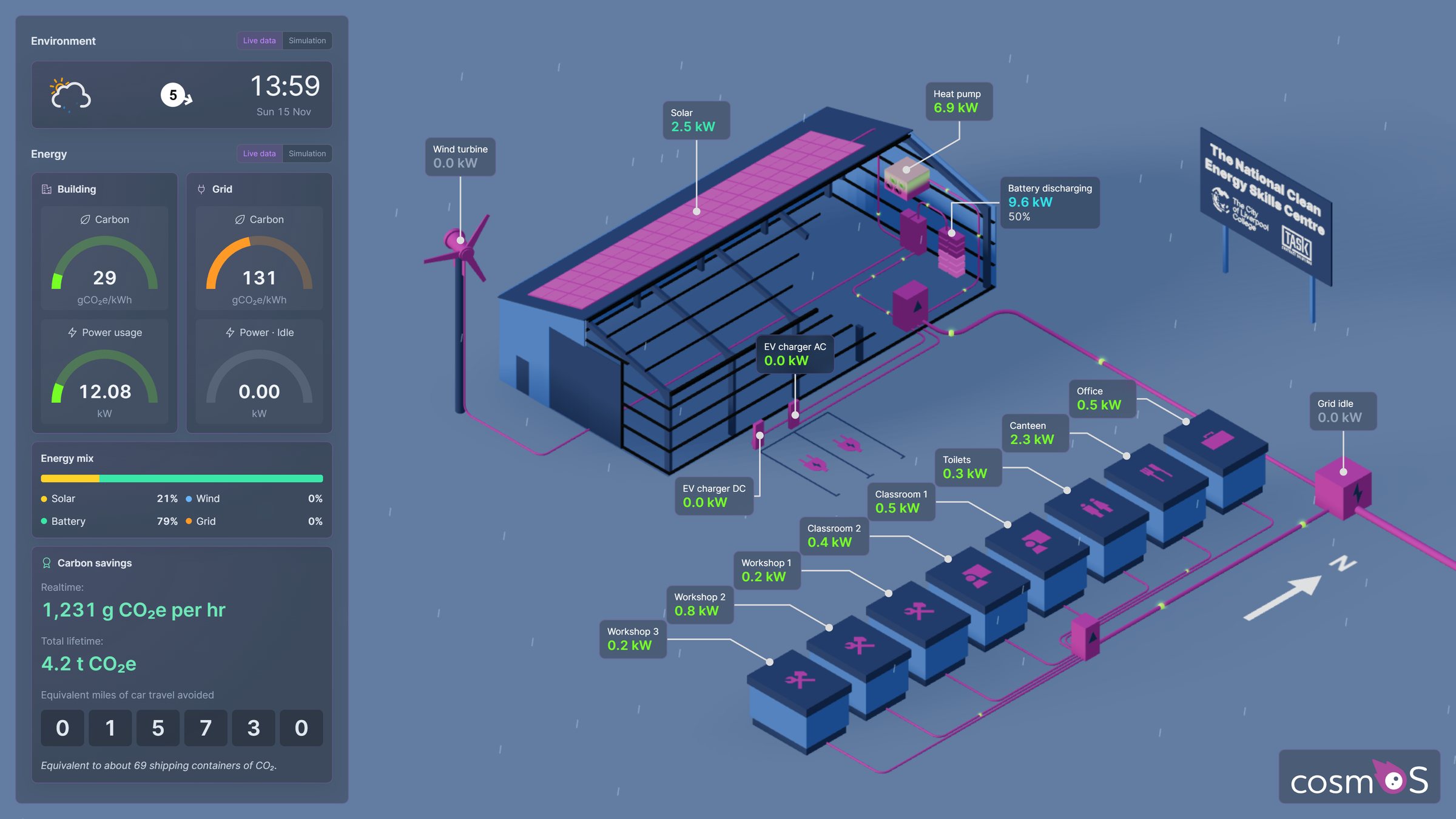
Solar, wind, battery, EV charging, HVAC, and metering are all shown together in one live view of the site.
"Most of these students will spend their careers in buildings that look much more like this one than the ones we have today: making their own power, storing it, and deciding when to use it. Here, they don't have to imagine it. They can watch it happen and learn the skill the industry needs most, which is how all these systems work together."
Steven Tomlinson, CEO at Nemiah
Read the Liverpool College case study at cosmos.energy.
Running a college, training centre or estate and want your buildings to teach, or simply to keep running? Get in touch.
Keep reading
We have delivered projects for


...to name just a few