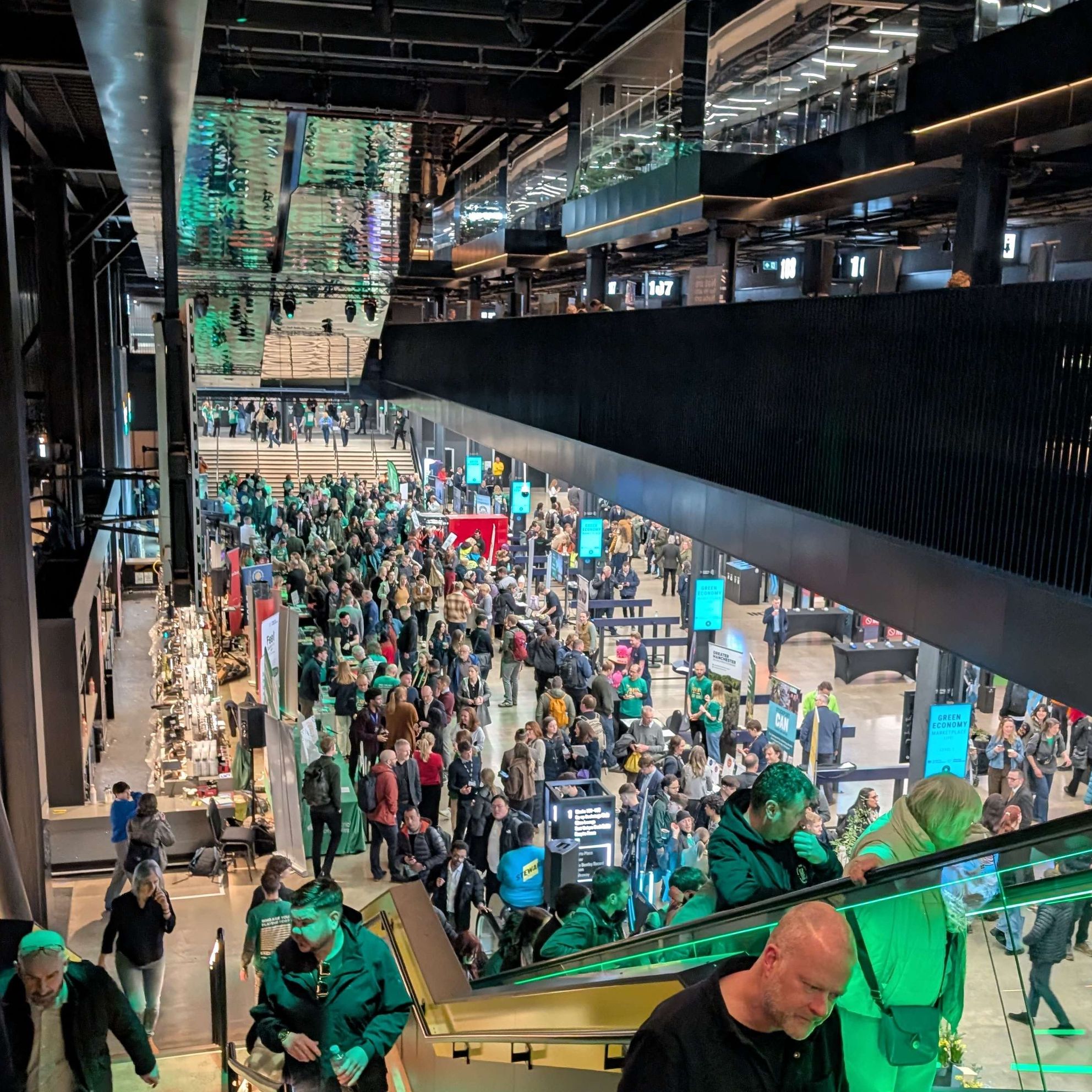
Nemiah at Manchester's Green Tech Events 2026
Nemiah's CTO spoke at the pro-manchester Green Tech Conference and exhibited at the GM Green Summit, sharing the 65% energy cut at Leigh Works with cosmOS.
Over one week this spring, Nemiah took part in two of Greater Manchester's biggest green-tech gatherings and brought one number to both events.
Our CTO, Adam Prescott, spoke at pro-manchester's Green Tech Conference on 26 February, sharing a stage with representatives from GMCA, Innovate UK, Anthesis and the University of Salford. A few days later, on 3 March, we were on the exhibition floor at the Greater Manchester Green Summit at Co-op Live, one of the region's largest net-zero and sustainability events.
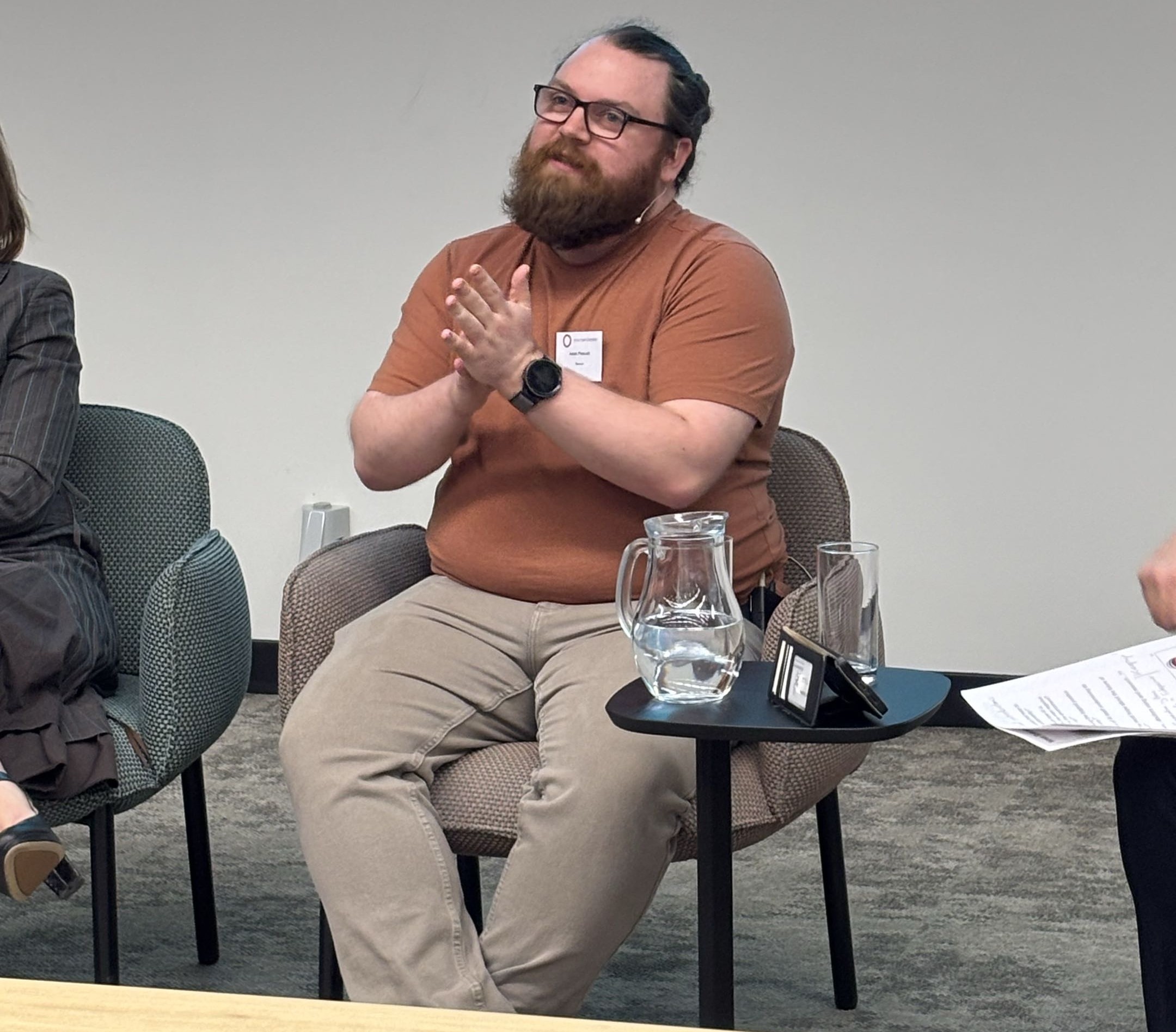
Adam Prescott presenting at the Green Tech Conference in Manchester.
The number we brought was 65 percent: the measured reduction in energy consumption at Leigh Works since cosmOS was deployed. What matters most is where that figure comes from. Leigh Works is not a controlled lab and not a simulation. It is an occupied coworking and makerspace with tenants, workshop activity and uneven demand patterns. The 65 percent reduction was achieved in those operating conditions without replacing the building's core plant.
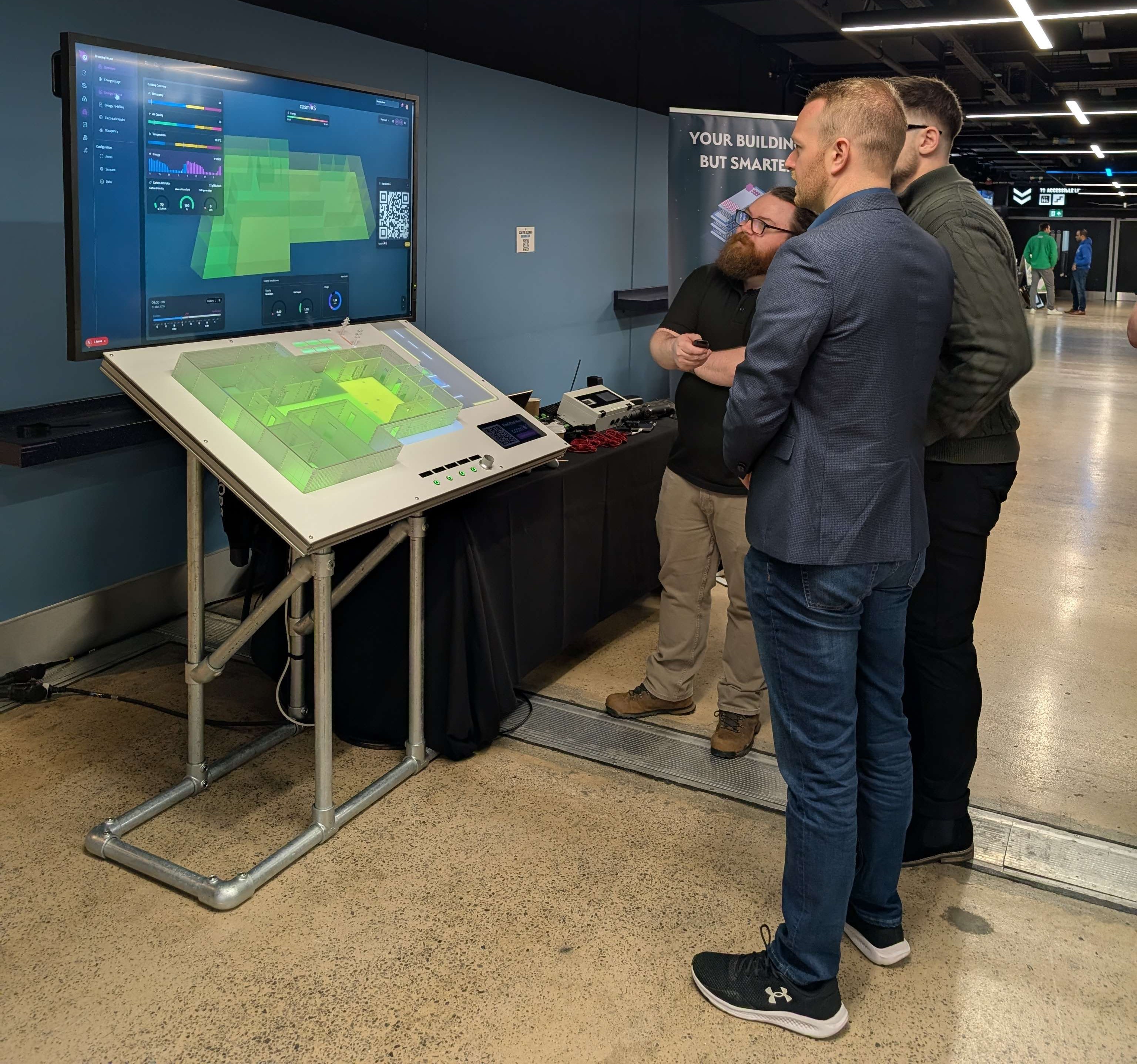
The cosmOS display used to demonstrate measured outcomes and deployment approach.
That practical point drove most conversations at both events. The default route to smart-building outcomes has often been a high-capex rip-and-replace programme, which keeps many organisations on the sidelines. cosmOS takes a different route, layering intelligence onto systems a building already has. For local authorities, housing providers, community organisations and SMEs, that lower-disruption path was the topic people wanted to discuss.
Another recurring discussion was delivery confidence: how quickly teams can move from interest to a scoped first phase without disrupting occupied buildings. We shared the same sequence we use in deployments, starting with monitoring and baseline creation before introducing targeted optimisation. That framework resonated with organisations under pressure to show progress while staying within operational and budget constraints.
Three themes came up repeatedly: how to measure carbon credibly instead of estimating it; how EV charging should be coordinated with wider building demand; and whether an approach proven in a 600 square metre site can scale to larger estates and portfolios. These are exactly the operating questions the market is now trying to answer.
Greater Manchester's 2038 carbon-neutral ambition is clear. The challenge, as many attendees noted, is adoption at scale: taking proven methods out of pilots and into mainstream building operations. That is the gap we are focused on closing, and why showing up with measured results matters more than showing up with a pitch deck.
We left both events with valuable follow-up conversations already in motion, including estates teams looking to benchmark first-site opportunities and public-sector organisations needing clearer carbon evidence for decision-making. That momentum is exactly what these events should produce: practical next steps, grounded in measured outcomes.
Get in touch if you'd like to save energy without replacing your building's plant or infrastructure.
Keep reading
We have delivered projects for


...to name just a few